
Technologies innovative and sustainable
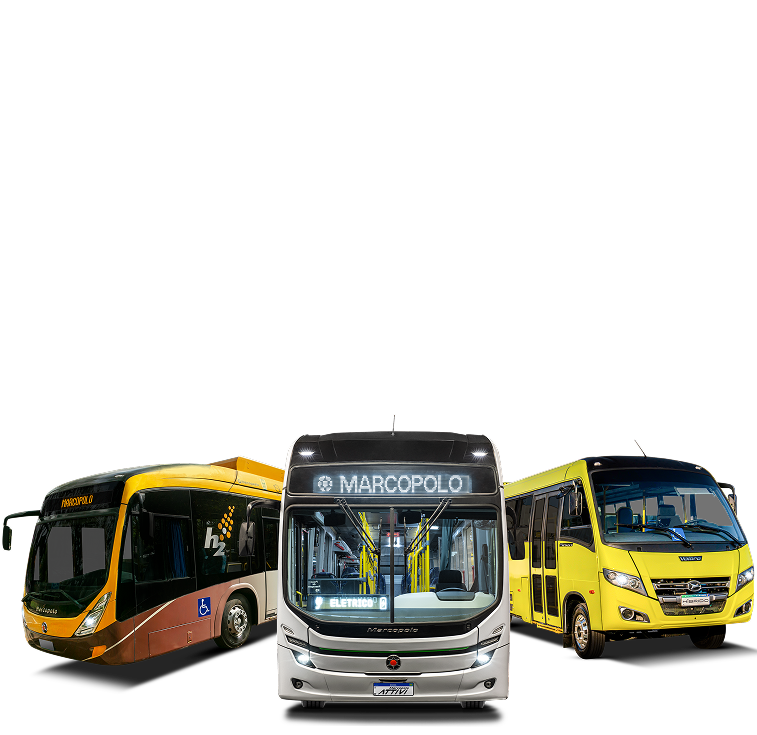
The future of mobility promises a revolutionary transformation, where electric, hybrid, fuel cell, and natural gas vehicles will become the primary mode of transportation, driven by innovative technologies, advanced charging infrastructure, and a global commitment to sustainability.
Sustainable energy driving mobility in cities
Imagine a transportation system that does not rely on fossil fuels to operate. In addition to reducing pollutant emissions, it makes it possible to save on operating costs and adds comfort to the user experience.
Beyond the environmental, economic, and social benefits, the growth of the niche and the constant improvement of technologies promise a safer future in transportation. And it is thanks to progress that we have developed increasingly stable, technological, and safe vehicles that contribute significantly to the decarbonization of transportation.





The vehicle is powered entirely by electric batteries, which are charged periodically.

Combination of combustion motor and electric motor, which reduces the impact of fossil fuels on operation.

The technology uses hydrogen and oxygen to generate electricity internally, which powers the vehicle.

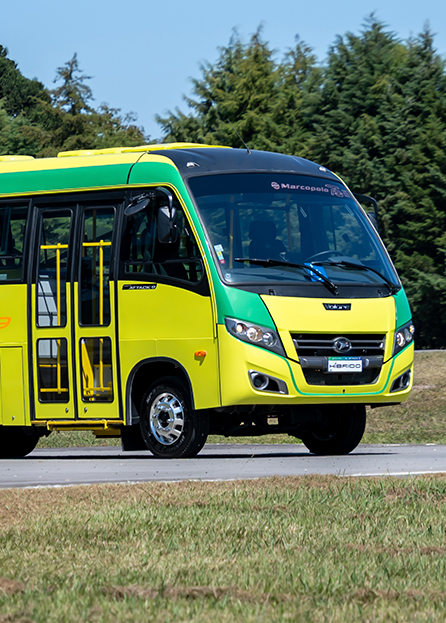
The vehicle is powered by CNG and Biomethane, offering better performance and range compared to traditional fuels.
Positive impacts
of sustainable
mobility
 Taxes
Tax incentives make the cost of electric, hybrid, fuel cell, or gas-powered vehicles very competitive.
 Efficiency
Today, the motors of our sustainable solutions are as efficient as or more efficient than traditional combustion motors, with the added advantage of reducing pollution.
 Maintenance
Easy maintenance due to the use of a propulsion system.
 Zero emissions
Our solutions are great allies in reducing carbon emissions into the atmosphere.
 Less Noise
Quieter, people-oriented traffic, especially in large urban centers.
 Performance in cities
Energy efficiency makes our solutions more reliable in high-traffic locations.
 Quick charge
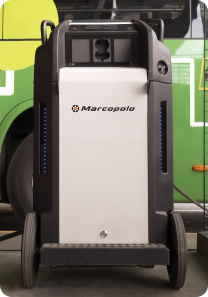
Electric, hybrid, hydrogen-powered, or natural gas vehicles can travel hundreds of kilometers on a single charge.
Sustainable mobility
Marcopolo na Conferência das Nações Unidas sobre Mudança Climática (COP30): Mobilidade Sustentável com Protagonismo Brasileiro
A COP30 reforçou o papel do Brasil na agenda climática global, e a Marcopolo esteve presente para mostrar como a mobilidade coletiva pode liderar a transição para uma economia de baixo carbono. Participamos de painéis na Green Zone e Blue Zone, apresentando soluções brasileiras para descarbonização, como eletrificação, biocombustíveis e inovação tecnológica.
Como membro da coalizão C.A.S.E., debatemos temas estratégicos como transporte público e biocombustíveis, além de expor um protótipo inédito: o primeiro ônibus híbrido elétrico/etanol do mundo, que elimina a necessidade de infraestrutura de recarga e garante operação carbono neutro. Também levamos o Volare Fly 10 GV, movido a biometano e gás natural, capaz de reduzir até 84% das emissões.
Com mais de 1.000 veículos sustentáveis em operação e investimentos contínuos em tecnologia e qualificação, reafirmamos nosso compromisso com soluções escaláveis que unem inovação, impacto social e responsabilidade ambiental. Valorizar o transporte coletivo é essencial para atingir as metas climáticas e construir um futuro mais limpo e inclusivo.

Marcopolo Sustainable Mobility
Marcopolo is promoting sustainable mobility in pursuit of decarbonization of transportation through the implementation of electric and hybrid buses. Marcopolo encourages research related to biodiesel, green diesel, and natural gas, renewable energy sources that can replace the use of fossil fuels.

Sustainable mobility has become priority
The future of mobility promises a revolutionary transformation, where electric, hybrid, fuel cell, and vehicle gas-powered vehicles will become the primary form of transportation, driven by innovative technologies, advanced charging infrastructure, and a global commitment to sustainability.

Do you have any questions or need help?